National Food Security Depends on Technological Development and Knowledge Transfer to the Production Sector
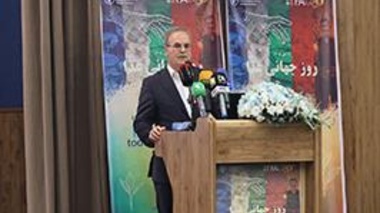
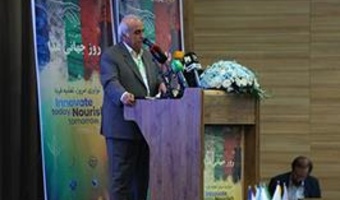
According to the Public Relations Department of the Iranian Fisheries Science Research Institute, the National Food Day Symposium, held on November 1, 2026, under the theme “Innovation Today, Nutrition Tomorrow” at the Agricultural Research, Education and Extension Organization (AREEO), featured a keynote by Gholamreza Golmohammadi. The Deputy Minister of Agriculture Jihad and President of AREEO addressed global food security challenges, noting: “Despite scientific advancements and increased food production capacity, ensuring sufficient access to food remains a major global challenge, and food security is not limited solely to production volumes.”
Golmohammadi emphasizedthat innovation is no longer an option but a necessity for sustaining production and increasing the resilience of the agricultural sector. He added: “Innovation does not necessarily mean the use of complex technologies; introducing drought-resistant varieties, improving irrigation methods, science-based plant nutrition management, reducing pest and disease damage, and enhancing post-harvest storage methods are all examples of innovation.”
Emphasizing the need for the practical application of research findings, Golmohammadi asserted: “Innovation is only valuable when it can solve real-world production issues, reduce production costs, and simultaneously enhance product quality. In an era where water scarcity, climate change, and environmental stresses are among the most significant challenges facing the country’s agricultural sector, the future of food production is more dependent on knowledge and technology than ever.”
The Necessity of Shifting Research Approaches Toward Solving Agricultural Issues
Referring to the AREEO’s role within the national agricultural research system, the President of AREEO stated: “As the scientific and research arm of the agriculture and natural resources sector, AREEO has a vital responsibility to address the challenges facing the sector. The success of research should not be measured solely by the number of publications, research projects, or developed technologies.”
He emphasized that the primary measure of research impact is its practical contribution to agricultural production, including reductions in water consumption, improvements in crop yields, the protection of natural resources, and the production of safe and healthy food.
Referring to 1405 (Solar Hijri) as the “Year of Education and Extension” at the AREEO, Golmohammadi stated that the goal of this approach is to accelerate the transfer of knowledge and technology—developed within AREEO, universities, and research institutions—to farmers and other agricultural stakeholders.
Highlighting the close links between research, education, and extension, he noted: “These three domains are inseparable components of a single mission; any disruption in one reduces the effectiveness of the entire system. Accordingly, the AREEO’s programme are designed around strategic planning, problem-solving, and increasing impact within the agricultural sector.”
Developing Smart Systems for Agricultural Production Management
The Deputy Minister of Agriculture Jihad further identified the utilization of digital technologies, remote sensing, and artificial intelligence as critical opportunities for transformation in agriculture, detailing the organization’s actions in these areas.
Referring to the establishment of the Agricultural Production Pattern Monitoring Center, he stated: “The Center is responsible for developing, implementing, and monitoring smart cropping patterns. These patterns have been formulated and disseminated not only for field crops but also for horticultural crops, aquaculture, greenhouse production, and medicinal plants.”He also mentioned the launch of the Remote Sensing System for Agricultural Products as another key achievement, noting: “This system enables the prediction of planted areas and the estimation of crop yields before harvest, which can play a decisive role in the planning and management of the agricultural sector.”
The President of the Agricultural Research, Education and Extension Organization (AREEO) also announced the development of the first AI-powered smart assistantfor the agricultural sector. He added: “Plans are underway to make this smart assistant available to farmers via mobile phones before the end of the current administration, allowing them to pose questions vocally and receive specialized, expert responses.”
International Collaborations: A Platform for Knowledge and Technology Transfer
Emphasizing the role of international cooperation in developing agricultural technologies, Golmohammadi stated: “While some technologies are produced domestically, there is a necessity to utilize the knowledge and technology of other nations in certain fields; therefore, developing scientific and international cooperation particularly important.”Referring to the collaborations between AREEO and the Food and Agriculture Organization of the United Nations (FAO), he noted: “Under the FAO technical cooperation project, a program to combat date palm pests and diseases is currently being implemented, and training and extension services for farmers agricultural practitioners have also begun in the country’s major date-producing provinces.”
He also highlighted the expansion of cooperation with the Organization of Islamic Cooperation for Food Security and the Shanghai Cooperation Organization, adding: “Cooperation on genetic resources, modern irrigation methods, smart farming, and the application of artificial intelligence in agriculture are among the main areas of these partnerships.Furthermore, memorandums of understanding have been signed with friendly nations, including China, to facilitate the exchange of knowledge and technology and the mutual utilization of scientific and research capacities.”
National Food Security Maintained Despite Economic Pressures and International Constraints
In another part of his remarks, the Deputy Minister of Agriculture Jihad addressed the difficult conditions of the country over the previous 18 months. He stated: “Despite conflicts, the activation of the snapback mechanism, transportation disruptions, and the escalating sanctions and international restrictions, the country’s food security has not been compromised.”
He attributed this to the unity, empathy, and cooperation different sectors of the country, particularly between producers and farmers, and expressed his gratitude for the efforts of agricultural stakeholders, executive bodies, and the relevant ministries in maintaining the stability of food supply.
Golmohammadi also paid tribute to the farmers, researchers, and agricultural research staff who lost their lives during recent incidents, emphasizing the importance of recognizing the active role of these stakeholders in ensuring continuous production and national food security.
In conclusion, he noted that maintaining the country’s food security achievements requires strategic planning, technological development, strengthening inter-sectoral cooperation, and supporting producers. He concluded: “The future path of the country’s agriculture lies in innovation, technology, and the transfer of knowledge to the production field; the ultimate goal of this approach is to achieve production that is more economical, sustainable, and aligned with the needs of the people’s livelihoods.”